
Gas Sensing Technology
Our sensors leverage advanced Raman spectroscopy to deliver unmatched performance in gas detection.
How Raman Spectroscopy Works
Raman spectroscopy analyzes the inelastic scattering of light by molecules. When laser light interacts with gas molecules, photons undergo energy shifts corresponding to molecular vibrational modes, creating a unique spectral fingerprint for each gas species.
Unlike traditional sensors that rely on chemical reactions, our Raman-based approach provides inherent selectivity at the molecular level, eliminating cross-sensitivity issues and delivering consistent measurements across diverse conditions.
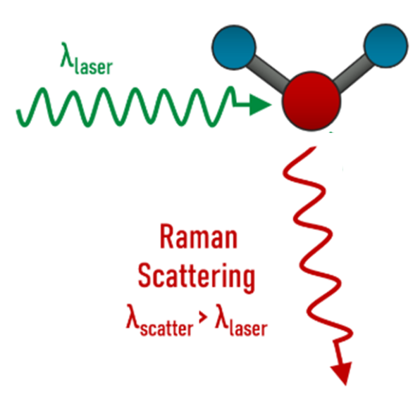
Laser light interacts with gas molecules, producing Raman scattered light at shifted wavelengths
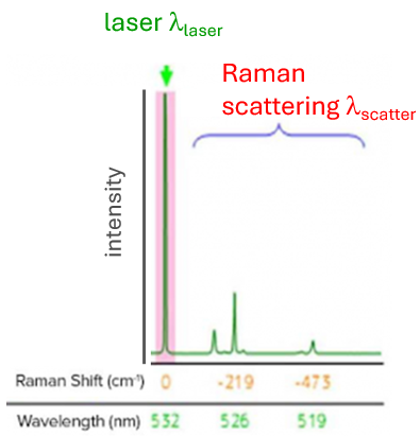
Each gas produces a unique spectral fingerprint with characteristic peak positions
Technology Advantages
Raman Spectroscopy Based
Identifies gas molecules through unique vibrational signatures for unparalleled specificity.
Ultra-Fast Response
Under 1 second response time enables immediate hazard detection.
Low Crosstalk
Molecular fingerprinting eliminates interference from other gases.
Wide Dynamic Range
Detects from below 100ppm to over 100,000ppm for versatile monitoring.
Rapid Recovery
Under 1 second recovery allows continuous real-time monitoring without dead zones.
Maintenance-Free
No calibration required throughout sensor lifecycle, reducing operational costs.
Technical Specifications
| Sensing Technology | Raman Spectroscopy |
| Response Time | <1 second |
| Recovery Time | <1 second |
| Crosstalk | Low (molecular-specific detection) |
| Detection Limit | <100 ppm |
| Measuring Range | 0 to >100,000 ppm |
| Accuracy | < ±5% |
| Calibration | Not required |
Interested in Our Technology?
Contact our engineering team to discuss how our Raman spectroscopy-based gas sensors can address your specific application requirements.
Get in Touch